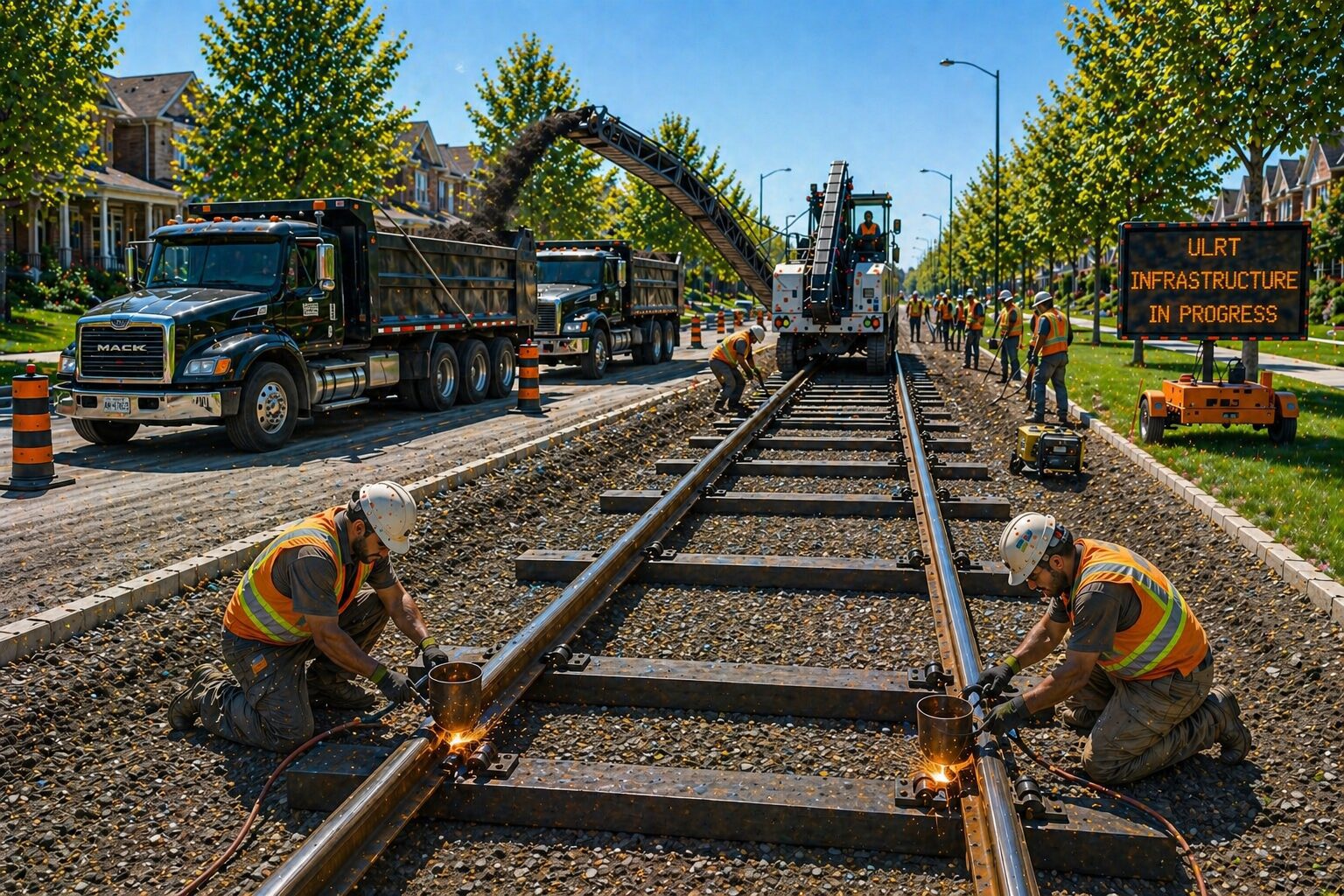
Municipal Transit Solutions combines the best of LRTs, electric trams, and fast construction techniques, creating a total transit system that meets the economic, social, environmental, and fiscal needs of 21st Century communities.
On/Off Rail capability streamlines routes with one vehicle across multiple modes, reducing transfer and transit times while attracting ridership with a total system solution for the cost of a typical BRT.
ULRT is available now in partnership with these industry leaders:
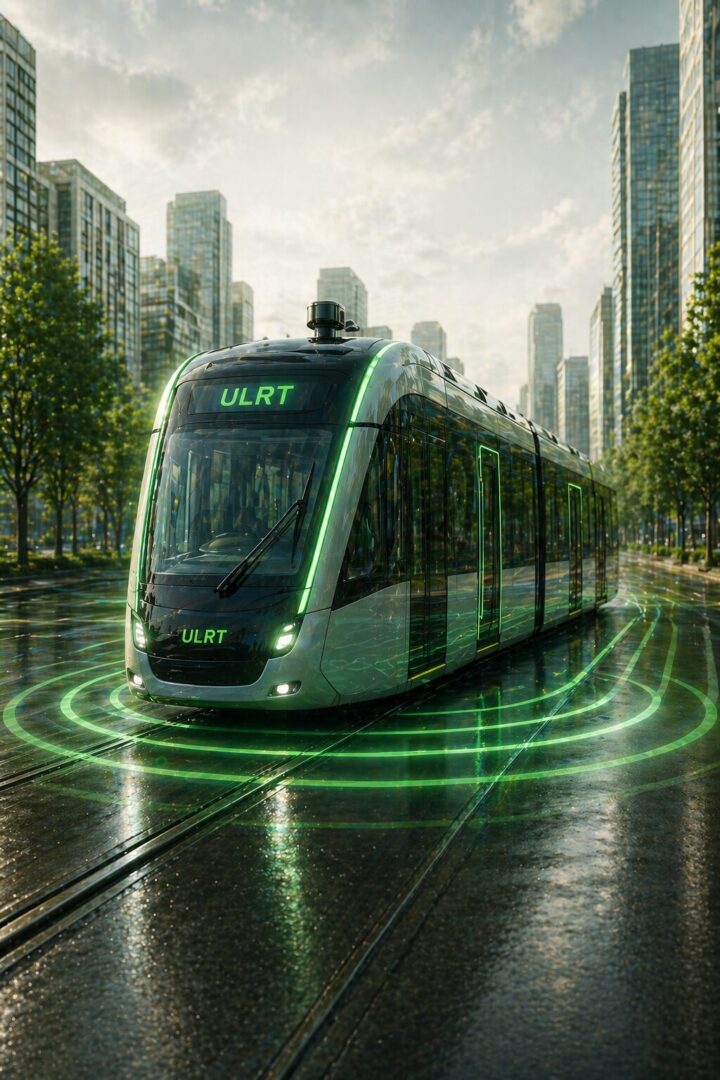
Full Autonomy: Smarter, Safer, More Flexible Transit
ULRT leverages full autonomy to transform transit from fixed and rigid to responsive and efficient.
Demand-Responsive Platooning
Vehicles dynamically couple and decouple based on real-time demand—delivering the right capacity at the right time.
Dynamic Routing
On/off-rail capability allows vehicles to adapt routes, reduce transfers, and respond to real-world conditions.
Vision Zero Safety
Advanced sensors and predictive systems enhance safety for passengers, pedestrians, and surrounding traffic.
Higher Frequency, Lower Cost
Autonomy enables more frequent service without proportional increases in operating cost.
The result: a transit system that adapts in real time—safer, more convenient, and more efficient.
The First and Last Mile Problem: Solved
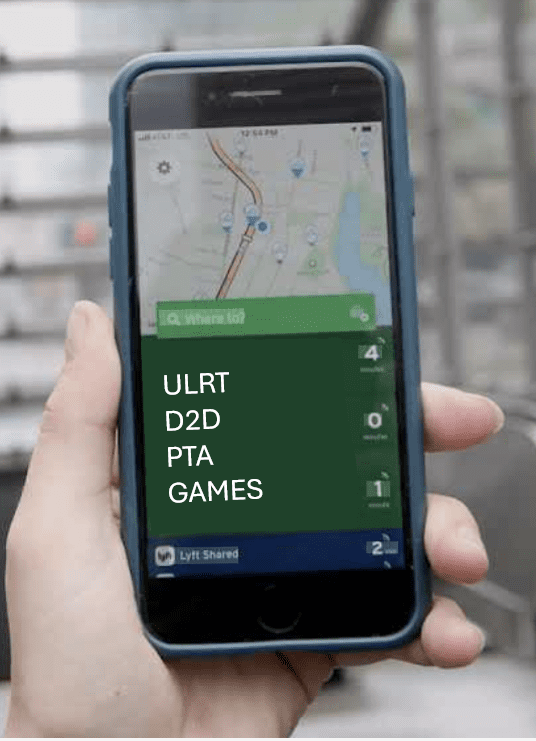
The ULRT system uses two different vehicles. A stop to stop vehicle which is 40 to 65 feet long and a door to door vehicle which is 24' long. They share the same rails but the door to door goes onto side streets for most pick ups and drop offs.
Rideshare software will quickly identify the regular pick ups and drops and optimize the routes to maximize efficiency and minimized travel times. Door to door service closes the gap between typical public transit and the mobility challenged community.
For those in need of assisted service, the ULRT system will dispatch attendants on the door to door vehicles within the rideshare platform, so every community can experience the ULRT system benefits.
The result: a transit system that will draw riders from cars reducing congestion and accelerating the environmental benefits of transit.
Surface Mount Rails: It's About Time
The long time to operation for LRT's is due to the need to plan for and construct massive rail foundations, pantograph poles and wires, dedicated signage and signals, crossings at intersections, and overpasses and underpasses all while dealing with underground utilities.
ULRT systems fit the existing infrastructure and can be planned, budgeted, financed, engineered, constructed, and operated within a few years.